

Some ingredients are so familiar that people forget how extraordinary they truly are. Lentils — small, earthy, unassuming — are among them. They’ve fed empires, survived droughts, anchored cuisines for thousands of years, and today they’re quietly powering the rise of plant-forward eating. Cheap, nutritious, and endlessly adaptable, lentils are the rare ingredient that feeds both history and the future.
Their appeal begins with simplicity. Lentils cook faster than most legumes, don’t require soaking, and thrive in climates where other crops struggle. For ancient communities across India, the Middle East, North Africa, and the Mediterranean, lentils weren’t an alternative — they were the foundation. They appear in comfort foods, festive dishes, stews, porridges, and everything in between.
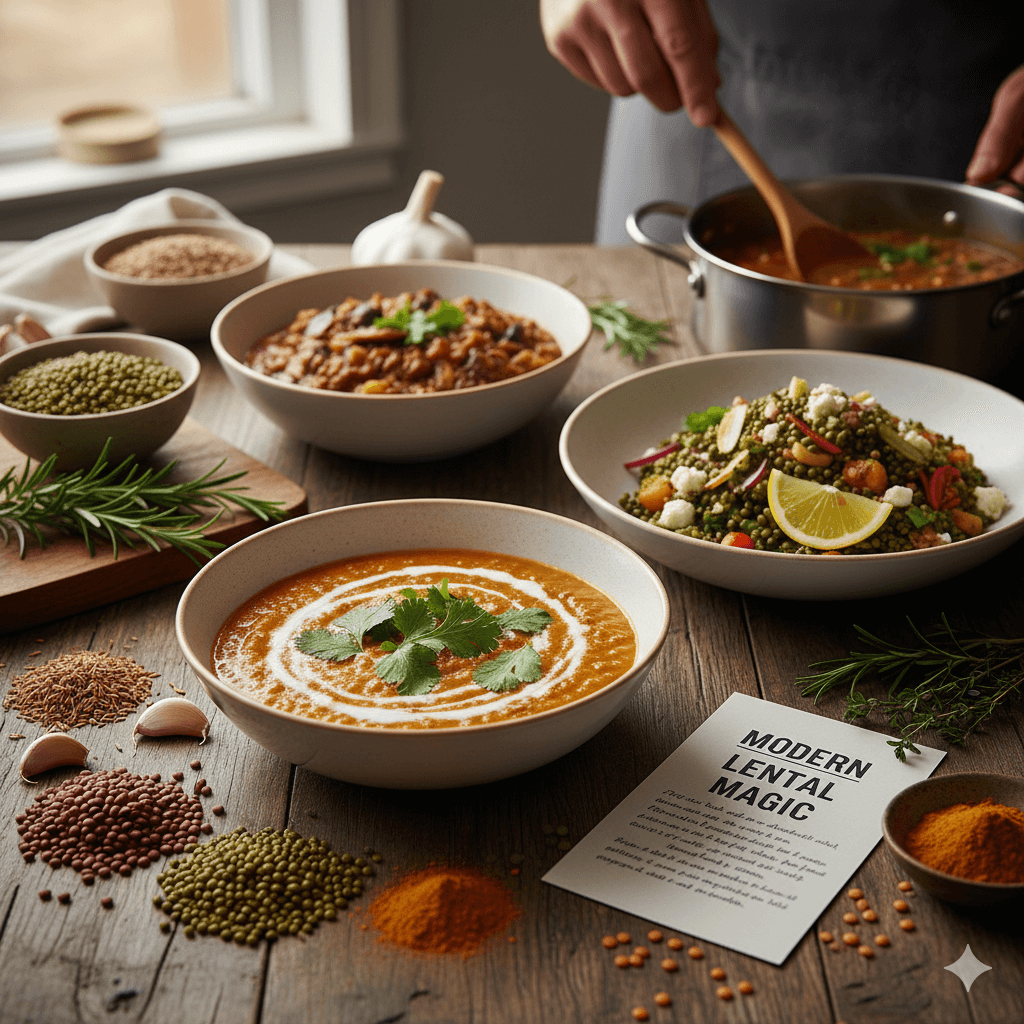
What makes lentils remarkable in modern kitchens is their versatility. Red lentils break down into silky soups and curries. Green and brown lentils keep their shape, making them ideal for salads, grain bowls, and stews. French puy lentils, peppery and firm, elevate dishes with a gourmet feel. Each type has its own personality, ready to absorb spices, sauces, and aromatics with enthusiasm.
Cooking with lentils is less about precision and more about layers of flavor. Start with aromatics — onions, garlic, ginger, carrots, celery — sautéed until fragrant. Add lentils, spices, stock, and time. That’s the basic formula, whether you’re making dal, a North African spiced stew, a European-style lentil ragù, or a simple weeknight soup. Lentils reward patience but don’t demand it; most varieties cook in 20–30 minutes.
For a heartier plant-based main, brown lentils can mimic the texture of ground meat surprisingly well. Cook them with smoked paprika, tomato paste, soy sauce, and herbs to build depth. Use the mixture in tacos, shepherd’s pie, stuffed peppers, or pasta sauce. The secret is avoiding overcooking; lentils need structure to stand in for meat.
In global cuisines, lentils shine in countless forms. Indian dals vary by region, each built from spices and techniques passed down generations. Middle Eastern mujaddara pairs lentils with caramelized onions and rice — humble ingredients elevated through contrast and texture. Italian lentil stew with herbs and olive oil transforms into winter comfort in a single pot. Everywhere, lentils adapt, absorb, and enrich.
Health is where lentils earn their permanent place in modern kitchens. Packed with protein, fiber, iron, and folate, they offer nourishment without fuss. Unlike many trendy protein substitutes, lentils are minimally processed, inexpensive, and environmentally efficient. They require little water, enrich soil, and store beautifully, making them a sustainability win from seed to plate.
But the magic of lentils goes beyond numbers. They represent comfort, resilience, and possibility. They teach that great cooking doesn’t require exotic ingredients or complicated techniques — just a few staples, a bit of heat, and imagination.
Next time you scan your pantry wondering what to cook, don’t underestimate the small bag of lentils waiting quietly on the shelf. Inside lies one of the world’s most reliable, nourishing, and underestimated ingredients — one that has fed generations and will continue shaping the future of sustainable eating.