

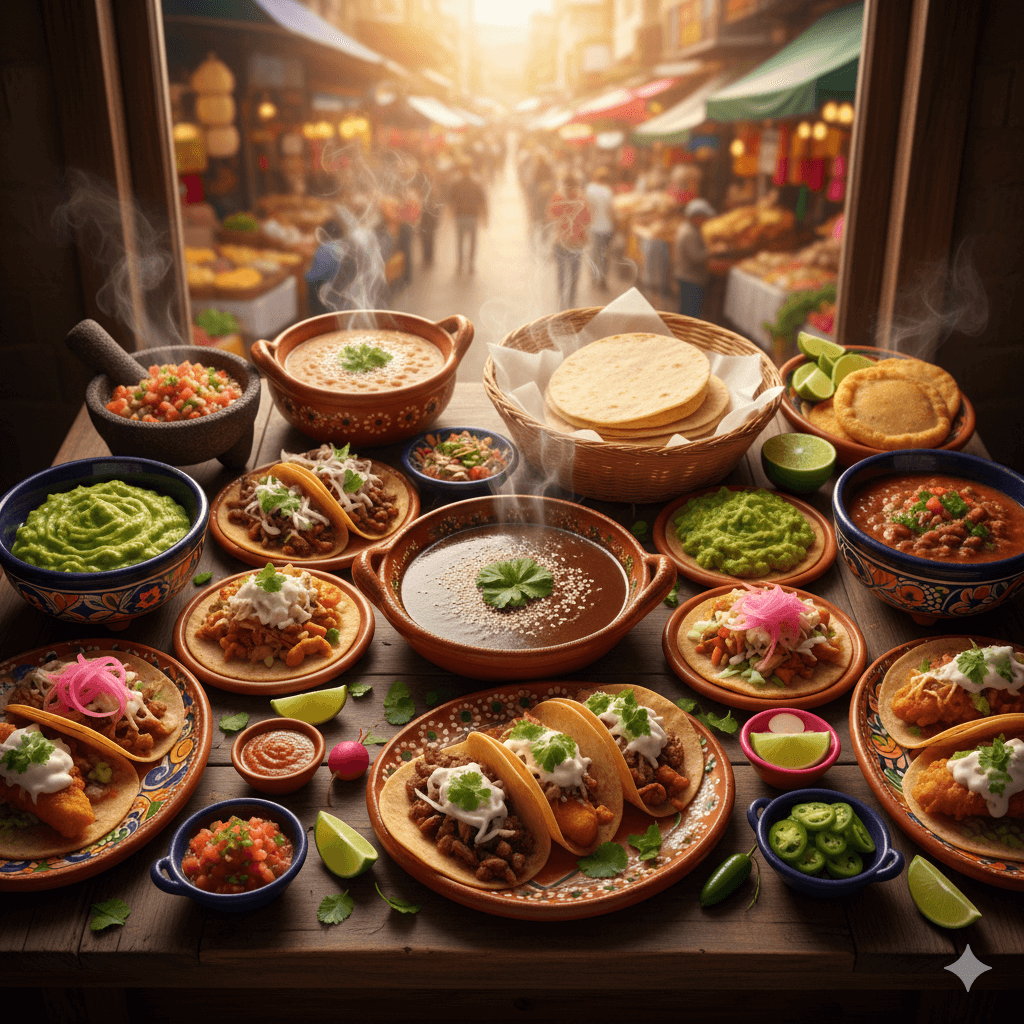
Mexico is a country bursting with vibrant colors, rich traditions, and bold flavors. Its cuisine is a reflection of a rich cultural heritage, blending indigenous ingredients with Spanish influences and regional diversity. Traveling through Mexico is a culinary adventure, from street-side taco stands to bustling markets and home-style kitchens.
Tacos: Mexico’s Quintessential Street Food
Tacos are perhaps the most famous Mexican food worldwide, yet experiencing them in Mexico is an entirely different experience. Corn tortillas are filled with meats, seafood, vegetables, and fresh salsas. Popular varieties include tacos al pastor (marinated pork with pineapple), carne asada tacos (grilled beef), and fish tacos along the coastal regions.
Tacos are more than just food—they’re a social experience. Street vendors serve them fresh, often accompanied by local beverages such as agua fresca or a cold Mexican beer. Sampling tacos in cities like Mexico City, Guadalajara, or Oaxaca provides an authentic taste of the country’s culinary soul.
Mole: A Symphony of Flavors
Mole is one of Mexico’s most celebrated traditional dishes, consisting of a complex sauce made with chilies, spices, nuts, seeds, chocolate, and other ingredients. There are over 20 types of mole, with mole poblano being the most famous.
Mole is typically served over chicken or turkey and represents the rich culinary history of Mexico, blending indigenous and European influences. Preparing mole is labor-intensive, often taking hours to achieve the perfect balance of flavors, making it a dish that is both a culinary and cultural experience.
Regional Specialties
Mexico’s culinary diversity is vast, with each region boasting unique flavors and specialties:
- Oaxaca: Known as the “Land of Seven Moles,” also famous for tlayudas (large toasted tortillas with toppings).
- Yucatán: Offers cochinita pibil, a slow-roasted pork dish marinated in citrus and achiote.
- Jalisco: Birthplace of birria, a savory stew of beef or goat.
- Northern Mexico: Famous for grilled meats, carne asada, and flour tortillas.
Exploring these regional dishes allows travelers to experience Mexico’s culinary history, shaped by geography, culture, and local ingredients.
Mexican Markets: A Feast for the Senses
Mexican markets are central to the country’s food culture. Vibrant colors, fragrant spices, fresh produce, and handmade goods create a feast for the senses. Markets like Mercado de San Juan in Mexico City and Mercado 20 de Noviembre in Oaxaca allow travelers to sample a variety of dishes, snacks, and beverages.
Street food vendors often set up near these markets, offering elotes (grilled corn with toppings), tamales, and fresh fruit with chili and lime. These experiences are immersive and give travelers a taste of local life.
Mexican Beverages
Mexican cuisine is complemented by unique beverages. Horchata, a sweet rice-based drink, and agua fresca, made from fresh fruits, are popular non-alcoholic options. Tequila and mezcal, distilled from agave, are globally celebrated spirits, often sipped slowly to appreciate their distinct flavors.
Desserts and Sweets
Mexican desserts are as diverse as its savory dishes. Popular treats include churros (fried dough coated in cinnamon sugar), flan (caramel custard), pan de muerto (a sweet bread for Día de los Muertos), and cajeta (caramelized goat milk spread). These desserts often carry cultural significance, tied to traditions, festivals, and family recipes.
Culinary Travel Tips
- Take a food tour: Guided tours help explore local cuisine safely and efficiently.
- Visit regional markets: Markets are ideal for discovering fresh, seasonal, and artisanal products.
- Try street food carefully: Stick to busy stalls with high turnover for hygiene and freshness.
- Learn local ingredients: Understanding chilies, herbs, and spices enhances the experience.
Dining Etiquette
Mexican dining emphasizes hospitality, communal meals, and savoring flavors. Meals are often shared with family or friends, accompanied by conversation and sometimes music. Accepting offers to try dishes is considered polite and is a great way to connect with locals.
Conclusion
Mexico is a culinary paradise, offering flavors that are bold, complex, and unforgettable. From street tacos in bustling cities to rich mole in traditional kitchens, from colorful markets to regional specialties, every meal tells a story of history, culture, and passion.
Traveling through Mexico is a feast for the senses, providing a deeper understanding of its people, traditions, and land. Every bite, sip, and flavor creates memories that linger long after the journey ends. For travelers seeking a rich gastronomic adventure, Mexico is a country that promises to delight, surprise, and inspire.