

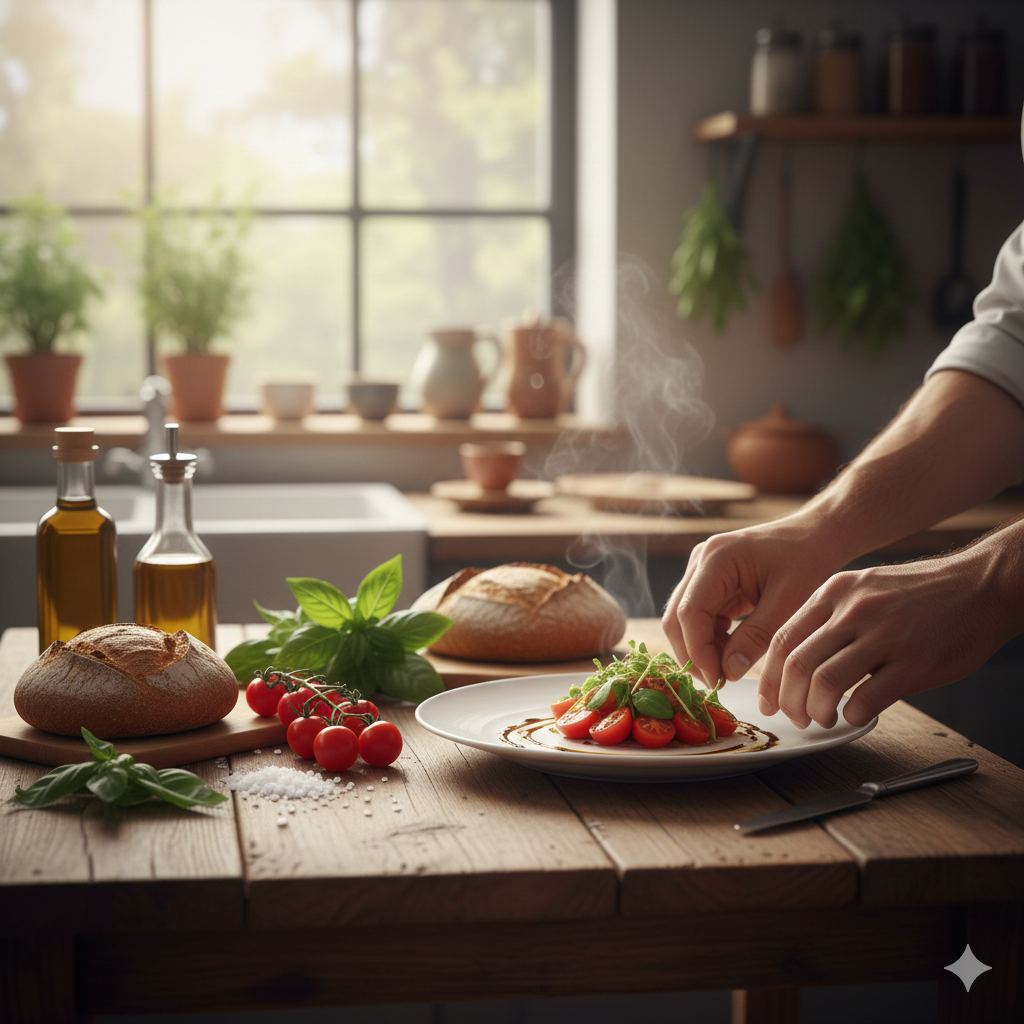
In a world filled with gourmet trends, exotic imports, and social media–worthy plates, it is easy to believe that extraordinary meals require complicated recipes and rare ingredients. But the truth is far simpler—and far more beautiful. Some of the most memorable meals are created from just a handful of humble ingredients, prepared with care, attention, and heart.
Extraordinary meals are not defined by how many components are on the plate. They are defined by balance, intention, and the way simple ingredients are allowed to shine. A ripe tomato with olive oil and sea salt. Fresh bread pulled from the oven. Lentils simmered slowly with garlic and herbs. These are not elaborate dishes, yet they can be deeply satisfying and unforgettable.
Sometimes, simplicity is the real sophistication.
The Beauty of Restraint
When you work with simple ingredients, there is no place to hide. You cannot mask poor-quality produce with heavy sauces or overpowering spices. Instead, each ingredient must stand confidently on its own.
This approach encourages respect for food. A fresh tomato picked at peak ripeness needs little more than a drizzle of olive oil. High-quality butter melted over warm bread becomes a luxurious experience. A perfectly cooked egg can be a complete meal.
Restraint in cooking is not about limitation—it is about focus. By limiting the number of ingredients, you allow flavors to develop naturally and harmoniously. You begin to appreciate texture, temperature, and subtle nuances.
It also teaches confidence. You learn to trust the ingredients instead of overcomplicating the process.
Freshness Makes the Difference
The secret to transforming simple ingredients into extraordinary meals often lies in freshness. A dish built around seasonal produce tastes vibrant and alive.
Think about the difference between a supermarket strawberry in winter and a locally grown strawberry in summer. The latter bursts with sweetness and fragrance. When ingredients are fresh, they require minimal intervention.
This is why many traditional cuisines rely heavily on seasonal cooking. Mediterranean dishes highlight ripe vegetables, fresh herbs, and good olive oil. Japanese cuisine celebrates fresh fish, rice, and delicate broths. Indian cooking builds complexity from lentils, spices, and grains that are everyday staples.
Freshness simplifies the process because the ingredients do most of the work.
Technique Over Complexity
Extraordinary meals are often a result of technique rather than ingredient count. Learning how to properly sauté onions until golden, how to roast vegetables to enhance their natural sugars, or how to simmer broth slowly can transform the simplest pantry items.
Take roasted potatoes, for example. Potatoes, oil, salt, and heat. That is all you need. But the technique—preheating the pan, allowing space between pieces, roasting at the right temperature—creates crisp edges and tender interiors that feel indulgent.
Or consider pasta aglio e olio: pasta, garlic, olive oil, chili flakes, and parsley. Few ingredients, yet when prepared properly, the result is deeply flavorful and satisfying.
Mastering technique gives you freedom. It allows you to elevate even the most basic ingredients.
Pantry Staples as Culinary Gold
Extraordinary meals often begin with pantry staples. Rice, beans, lentils, flour, eggs, canned tomatoes—these are the building blocks of countless cuisines around the world.
A pot of rice can become fried rice with leftover vegetables. Beans can turn into soups, stews, salads, or spreads. Flour becomes bread, tortillas, noodles, or pastry.
When you look at your pantry creatively, you begin to see possibility instead of limitation. Many iconic dishes were born from necessity. Families used what they had available and created meals that have endured for generations.
The lesson is simple: you do not need a fully stocked gourmet kitchen to cook something remarkable. You need imagination and intention.
Flavor Pairings That Work
Simple ingredients become extraordinary when paired thoughtfully. Salt enhances sweetness. Acid brightens richness. Herbs add freshness. A squeeze of lemon over grilled vegetables can bring a dish to life. A sprinkle of flaky salt over chocolate deepens its complexity.
Understanding basic flavor balance—sweet, salty, sour, bitter, and umami—allows you to adjust dishes with minimal additions. Instead of adding more ingredients, you refine what is already there.
For example, a bowl of tomato soup can be elevated with a splash of cream and fresh basil. Grilled chicken becomes extraordinary with a squeeze of citrus and cracked pepper. Even oatmeal can feel special with toasted nuts and a drizzle of honey.
Sometimes, one small adjustment makes all the difference.
Slowing Down the Process
Extraordinary meals are often tied to patience. Slow cooking allows flavors to deepen and ingredients to transform.
A simple pot of beans simmered for hours develops richness and texture. A loaf of bread made with time and fermentation tastes complex and hearty. Even allowing meat to rest after cooking improves flavor and tenderness.
When you slow down, you pay attention. You taste along the way. You adjust seasoning. You observe texture. Cooking becomes less about rushing to finish and more about enjoying the journey.
This mindfulness carries into the meal itself. People savor what was prepared with care.
The Emotional Ingredient
Beyond freshness and technique, there is another ingredient that makes meals extraordinary: emotion.
Food prepared with thoughtfulness feels different. Whether you are cooking for family, friends, or yourself, the intention behind the meal matters. Sharing a simple homemade dish can create stronger memories than dining at an expensive restaurant.
Think of a bowl of homemade soup delivered to someone who is unwell. Or pancakes made on a quiet weekend morning. These meals are not extravagant, but they are meaningful.
Extraordinary meals often carry warmth and generosity. They reflect connection and care.
Making Simplicity Your Signature
If you want to embrace the philosophy of simple ingredients and extraordinary meals, begin by simplifying your approach:
- Choose quality over quantity.
- Cook seasonally when possible.
- Master a few techniques well.
- Taste and adjust instead of adding more.
- Focus on balance rather than complexity.
You may find that your cooking becomes more intuitive. You rely less on strict recipes and more on understanding ingredients. You learn that a few well-chosen components can create a complete and satisfying experience.
This approach also reduces waste and stress. Fewer ingredients mean fewer decisions and less clutter. Cooking becomes enjoyable rather than overwhelming.
Rediscovering the Joy of Everyday Cooking
Extraordinary meals do not need to be reserved for holidays or special occasions. They can happen on ordinary evenings with simple ingredients from your refrigerator.
A quick stir-fry made with leftover vegetables. A crisp salad with fresh greens and homemade dressing. A pot of lentil soup seasoned perfectly. These meals nourish both body and spirit.
When you stop chasing complexity and start honoring simplicity, cooking becomes empowering. You realize that extraordinary experiences are not built on extravagance—they are built on care, attention, and quality.
Conclusion
Simple ingredients have extraordinary potential. When chosen thoughtfully, prepared with proper technique, and seasoned with intention, they can create meals that linger in memory long after the last bite.
In a culture that often celebrates excess, there is something refreshing about returning to basics. A handful of ingredients. A clear focus. A willingness to let natural flavors shine.
The next time you step into your kitchen, look at what you already have. Fresh vegetables, grains, herbs, eggs, oil, salt. You may be closer to an extraordinary meal than you think.
Because sometimes, the most remarkable dishes are not the most complicated.
They are simply honest, well-prepared, and made with care.