

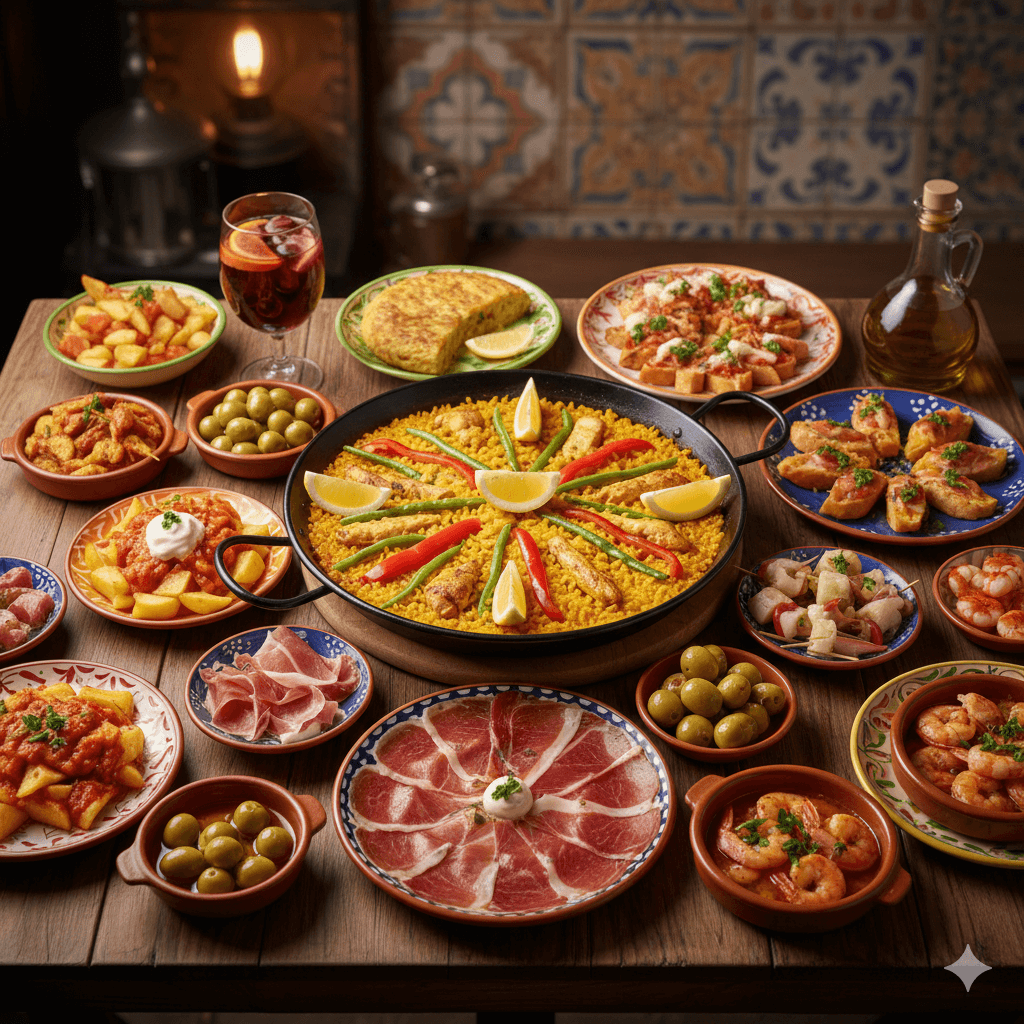
Spain is a country where food and culture are inseparable. Every region has its own culinary identity, shaped by history, climate, and local ingredients. From lively tapas bars in Barcelona to traditional paella in Valencia, Spain offers a gastronomic adventure for travelers who want to taste the essence of the country.
Tapas: The Heart of Spanish Dining
Tapas are perhaps Spain’s most famous contribution to global cuisine. These small plates are designed for sharing, encouraging conversation and community. Popular tapas include patatas bravas (crispy potatoes with spicy sauce), jamón ibérico (cured Iberian ham), tortilla española (Spanish omelet), and gambas al ajillo (garlic shrimp).
In cities like Barcelona and Madrid, tapas are not just food—they are a social experience. Hopping from one tapas bar to another, sampling specialties at each, is a perfect way to experience Spanish nightlife and culture.
Paella: A Valencian Treasure
No discussion of Spanish cuisine is complete without paella, the iconic rice dish originating from Valencia. Traditional paella Valenciana combines rice, saffron, chicken, rabbit, and local vegetables. Seafood versions are also popular along the coast, featuring shrimp, mussels, and clams.
Paella is more than a dish; it’s a communal experience. Locals often gather with friends and family to enjoy paella together, making it a dish synonymous with warmth and celebration. Travelers can find authentic paella experiences in Valencia or even join cooking classes to learn its secrets firsthand.
Regional Specialties
Spain’s diverse regions offer a kaleidoscope of flavors:
- Andalusia: Known for gazpacho (cold tomato soup) and jamón serrano. Olive oil is central to the cuisine here.
- Basque Country: Famous for pintxos, small skewered snacks served in bars, perfect for bar-hopping.
- Galicia: Renowned for fresh seafood, including octopus in pulpo a la gallega
- Catalonia: Offers crema catalana, a dessert similar to crème brûlée, and fresh Mediterranean dishes in Barcelona.
Exploring Spain’s regions through food is an immersive cultural experience, offering travelers insight into local history and traditions.
Street Food and Markets
Spanish markets are vibrant centers of culinary life. Mercado de La Boqueria in Barcelona, Mercado Central in Valencia, and others across the country are treasure troves of fresh produce, meats, cheeses, and baked goods. Street food is also thriving, with churros con chocolate being a must-try treat for breakfast or snack.
Wine and Sangria
Spain is one of the world’s top wine-producing countries. Regions like Rioja, Ribera del Duero, and Priorat produce red wines that pair beautifully with hearty Spanish dishes. White wines from Rías Baixas and cava (sparkling wine) from Catalonia are equally delightful.
Sangria, a fruity wine punch, is another popular choice, especially in the summer months. It’s refreshing, easy to drink, and perfect for enjoying at outdoor terraces or during festive gatherings.
Desserts and Sweets
Spain offers a wide array of desserts to satisfy any sweet tooth. Popular options include turrón (nougat), flan (caramel custard), and ensaimadas (spiral pastries from Mallorca). Traditional sweets often have deep historical roots, reflecting influences from Moorish, Roman, and Mediterranean cultures.
Culinary Experiences for Travelers
To make the most of Spanish cuisine:
- Take a tapas tour: Explore local bars and learn about regional variations.
- Participate in a paella cooking class: Gain hands-on experience and a deeper understanding of ingredients.
- Visit local markets: Sample fresh produce and artisanal products.
- Attend food festivals: Many regions celebrate culinary traditions with festivals featuring local specialties.
Dining Etiquette
Dining in Spain is a leisurely experience. Lunch is typically the main meal, and dinner is eaten later in the evening, often around 9–10 pm. Sharing food is common, especially with tapas, and meals are accompanied by conversation, wine, and enjoyment of life’s simple pleasures.
Conclusion
Spain’s culinary landscape is as diverse and vibrant as its culture. From the lively tapas bars of Barcelona to the rich flavors of paella in Valencia, the country offers a journey of discovery for the taste buds. Regional specialties, street food, and desserts make each meal an adventure.
For travelers, exploring Spain through its food is more than eating—it’s a way to connect with local culture, history, and people. Whether savoring a bite of jamón ibérico, sipping sangria under the sun, or learning to make paella, Spain’s cuisine invites every visitor to experience the country in the most delicious and memorable way possible.