

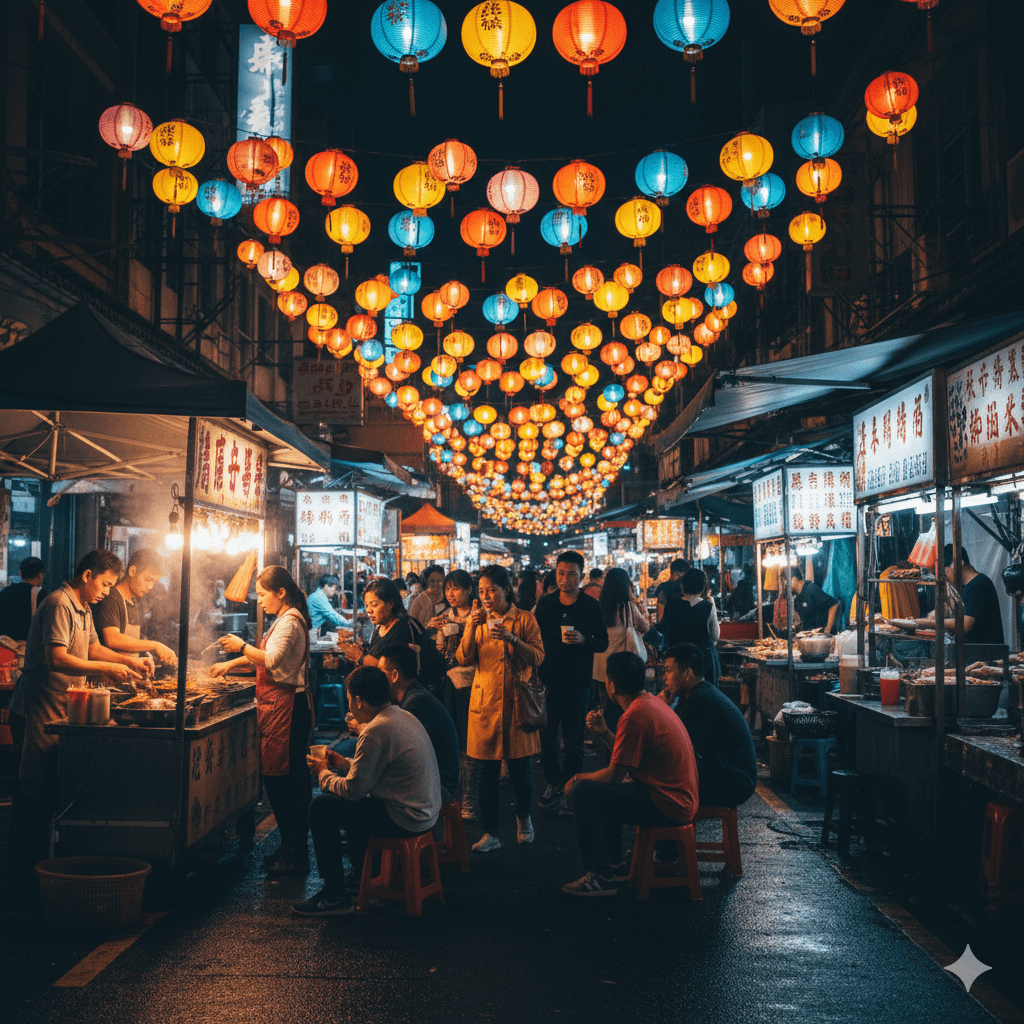
Night markets are never just about food.
They are living theaters, stages where cultures perform in lantern light and sizzling aromas. Walking through one is like stepping into a painting that moves, hums, and smells. You hear laughter, music, vendors calling out their wares, and the subtle clink of coins. You feel the air thick with spice, smoke, and anticipation.
Each stall tells a story. The old woman rolling dumplings in the same rhythm for decades, the teenage street magician perfecting his trick for an audience of curious strangers, the artisan who folds paper lanterns while humming softly to herself. These markets aren’t just commerce— they’re performance, craft, and conversation rolled into one
The magic lies in the unplanned moments. A taste of sticky rice you weren’t expecting, a spontaneous conversation with a fellow traveler, the sudden realization that everyone here— locals and visitors alike—is connected by curiosity, hunger, or simple delight. Night markets are equalizers: wealth and status fade under neon light and tantalizing scents.
They also teach patience and attention. You can’t rush the market; you have to pause, step aside, take in the colors and sounds, watch the chaos orchestrate itself. In the midst of this controlled chaos, you find small beauties: the perfect char on a skewer, the way a cat weaves between legs without disturbing anyone, the way laughter travels from one end of the street to the other.
By the time you leave, the market has seeped into your memory. It’s in the taste still lingering on your tongue, the rhythm of footsteps on cobblestones, the hum of a city that refuses to sleep quietly. Night markets remind you that life doesn’t always happen in daylight, and some of its most vivid experiences are earned in the dark.