

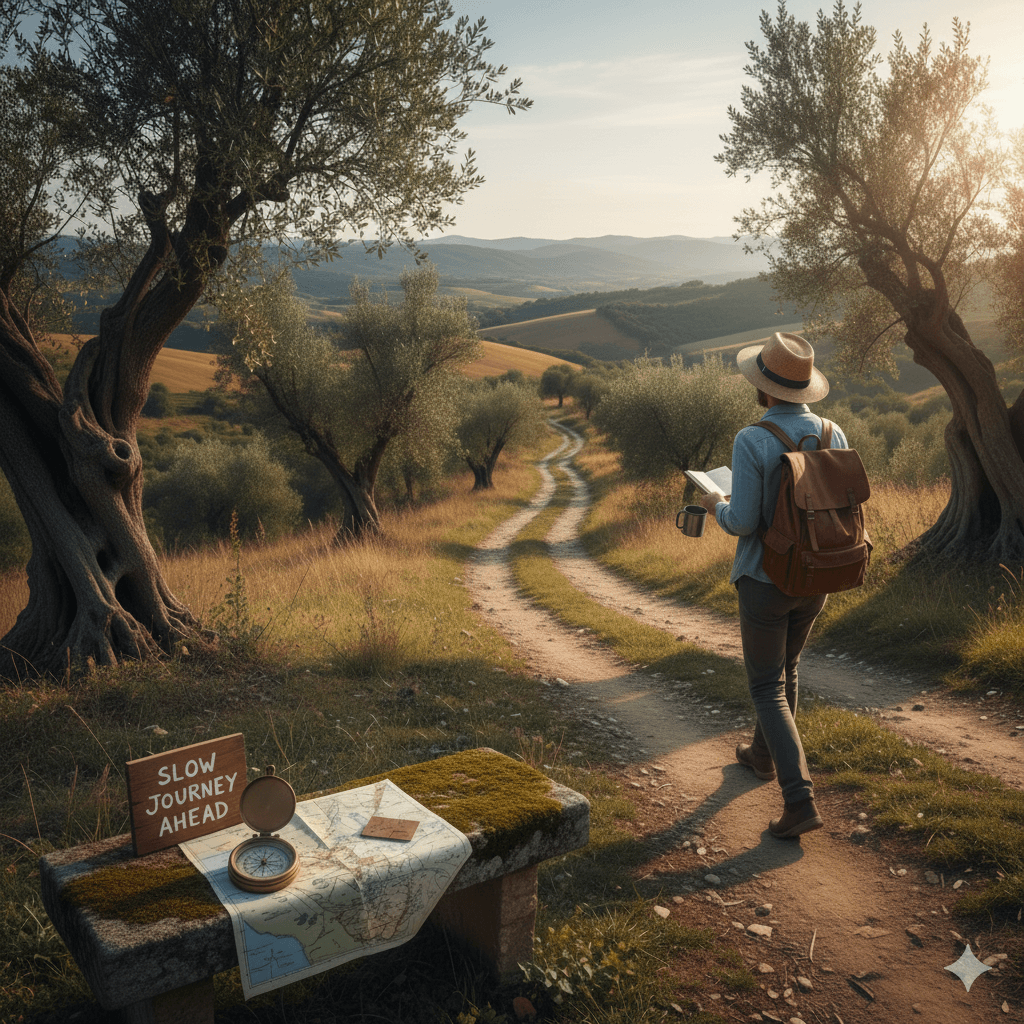
Travel has become a race. A rush of checklists, selfies, itinerary apps, and a constant fear of missing out on something better just around the corner. But somewhere between the hurried flights and rapid itineraries, we’ve forgotten that travel isn’t supposed to feel like speedrunning a video game. It’s supposed to feel lived. Experienced. Absorbed.
Slow travel brings that back.
Slow travel isn’t about moving slowly; it’s about being present. It’s the decision to linger in a café because the sunlight hits the table just right. To stay an extra day in a small town because you’re not done listening to its rhythm. To walk instead of ride, sit instead of rush, and savor instead of consume. It’s a philosophy—one that rewards the traveler who chooses depth over distance.
Most people think seeing more equals experiencing more. But the opposite is usually true. You can visit ten tourist attractions in a day and remember none of them. Or you can spend one afternoon sitting in a park in Lisbon listening to old men argue about football and remember it forever.
Slow travel reveals the moments that itineraries ignore. It teaches you that connection happens when you let time breathe.
Cities respond differently to travelers who linger. Shopkeepers remember your face by the second visit. Baristas start greeting you like a regular. You begin to notice tiny details: the pattern of the tiles by your Airbnb’s front door, the bakery that only sells fresh pão de queijo before 9 a.m., the street musician who always plays under the same archway. What begins as a trip starts to feel like a soft, temporary life.
Slow travel strips away the pressure to “get everything right.” You don’t need to wake up at dawn to beat the crowds, don’t need to sprint for a tour, don’t need to cram every hour with stimulation. You can get lost without panic, because getting lost becomes part of the point.
The luxury isn’t in fancy hotels—it’s in time
There’s a sustainability element too. Staying longer means fewer flights, fewer plastic-wrapped breakfasts, fewer rushed impulse buys. You contribute more thoughtfully—to local shops, local restaurants, local life. Communities feel the difference between visitors and participants.
But perhaps the most meaningful part is the internal shift. When you slow down, your senses reset. You start noticing the scent of fresh rain on warm cobblestones, the way evening shadows stretch across a plaza, the subtle flavors in a home-cooked meal someone served you with pride
Traveling slowly doesn’t mean doing less. It means feeling more
And when you return home, you don’t just bring back photos—you bring back clarity. In a world obsessed with rushing, slow travel is an act of rebellion. And it’s worth savoring, one unhurried moment at a time.