

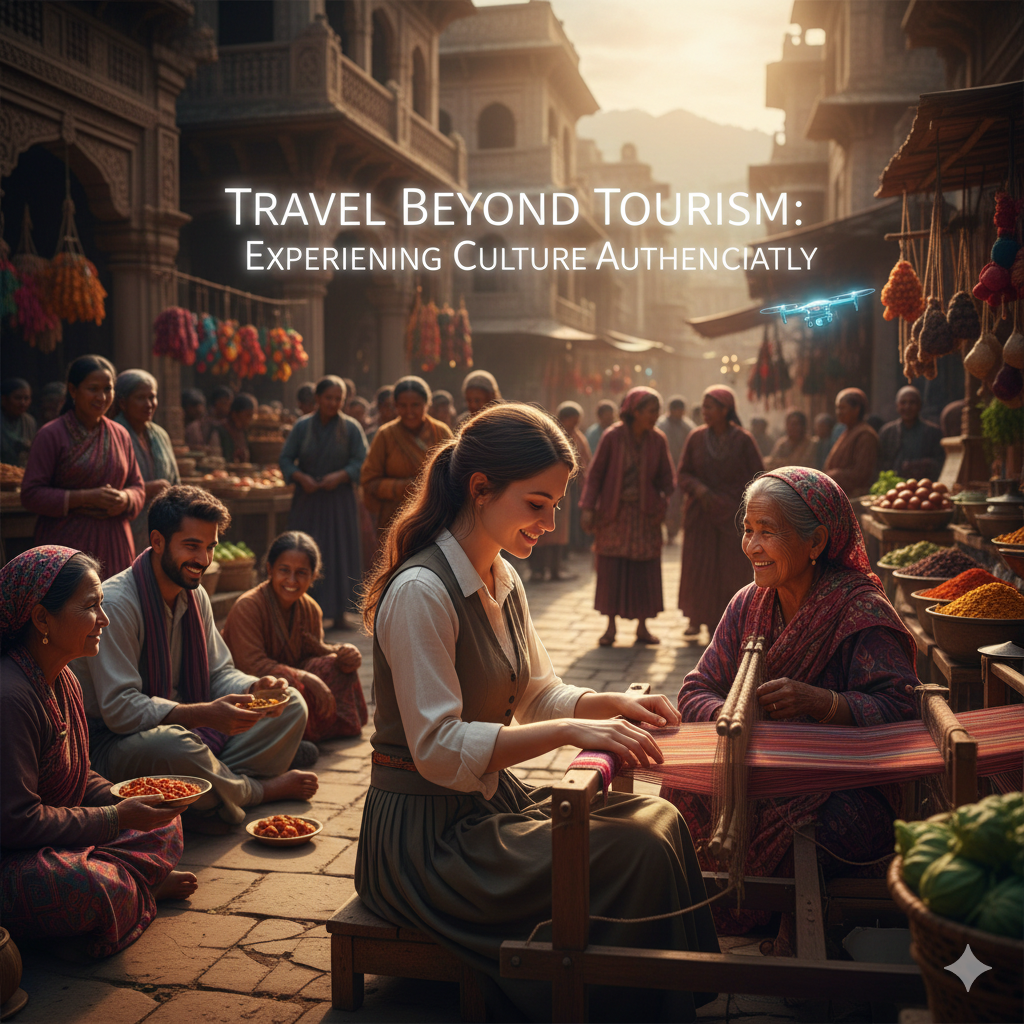
Travel has never been more accessible. Flights are cheaper, destinations are heavily marketed, and curated itineraries promise “must-see” attractions in record time. Yet, somewhere along the way, travel began to resemble consumption more than connection. We check into hotels that look the same across continents, eat in restaurants designed for visitors, and leave with photographs but little understanding of the place itself.
To travel beyond tourism is to step outside that pattern. It is to move from observation to participation, from checklist to curiosity. Experiencing culture authentically requires intention, humility, and a willingness to slow down. It asks travelers not just to see a place—but to engage with it.
Shifting from Sightseeing to Understanding
Tourism often revolves around landmarks: monuments, museums, famous viewpoints. While these sites hold historical and cultural importance, authentic travel begins when we look beyond them.
Instead of asking, “What should I see?” consider asking, “How do people live here?”
Authentic experiences arise from understanding daily life—the rhythms, values, traditions, and conversations that shape a community. It may mean visiting local markets rather than souvenir shops. It may mean spending an afternoon in a neighborhood park instead of standing in line for a famous photo.
When we prioritize understanding over spectacle, we begin to travel differently.
Learning Before You Go
Authentic cultural experiences start long before boarding a plane. Research the history of the destination. Learn about its social customs, traditions, and challenges. Understand the context behind the places you plan to visit.
A basic understanding of language—even a few greetings—can transform interactions. Saying “thank you” or “good morning” in the local language signals respect and effort.
Learning beforehand reduces cultural misunderstandings and deepens appreciation. You are no longer simply a visitor; you are a learner.
Supporting Local Businesses
One of the most direct ways to experience culture authentically is by supporting local businesses. Stay in locally owned guesthouses. Eat at family-run restaurants. Purchase handmade crafts from artisans rather than mass-produced souvenirs.
When you support local enterprises, you contribute directly to the community’s economy. More importantly, you gain access to genuine conversations and insights.
A small café owner might share stories about neighborhood history. An artisan might explain the symbolism behind traditional designs. These interactions provide layers of understanding that chain establishments rarely offer.
Participating, Not Performing
Many tourist attractions are carefully curated performances designed to meet visitor expectations. While these can still be enjoyable, authentic travel seeks participation rather than performance.
Attend local events that are not organized solely for tourists. Join community festivals. Take part in cooking classes led by residents. Volunteer in short-term cultural exchange programs, when appropriate and ethical.
Participation fosters connection. It transforms you from spectator to contributor.
Authenticity is not about witnessing something “untouched.” It is about engaging respectfully with living culture.
Slowing Down the Pace
Authentic cultural experiences require time. Fast-paced itineraries often leave little room for spontaneous moments.
Instead of visiting five cities in ten days, consider staying longer in one place. Walk through neighborhoods without specific destinations. Sit in public squares. Observe how people interact.
Slowing down creates space for organic interactions. Conversations begin naturally. You notice details that rushed travel would overlook.
Authenticity grows in stillness.
Respecting Cultural Norms
To experience culture authentically, respect is essential. Research local dress codes, religious customs, and social etiquette.
In some places, modest clothing may be appropriate. In others, removing shoes before entering homes is customary. Understanding these norms prevents unintentional offense and demonstrates appreciation.
Authentic travel is not about imposing your lifestyle on others. It is about adapting with humility.
Listening More Than Speaking
One of the most powerful tools in authentic travel is listening. Ask questions, but listen carefully to the answers.
People often share stories about their hometowns, traditions, and personal experiences. These narratives provide richer insight than any guidebook.
Listening without judgment or preconceived notions fosters genuine exchange. It allows you to understand perspectives shaped by different histories and realities.
Authentic cultural experiences often unfold in conversation.
Avoiding the “Exotic” Mindset
Experiencing culture authentically requires abandoning the mindset that other cultures exist for our entertainment. Avoid labeling traditions as “exotic” or “strange.”
Every community has its own internal logic shaped by geography, history, and values. Approaching differences with curiosity rather than comparison builds empathy.
Authenticity lies in recognizing common humanity rather than highlighting contrast.
Embracing Discomfort
Traveling beyond tourism may involve stepping outside comfort zones. You may encounter unfamiliar foods, communication challenges, or cultural practices that differ from your own.
Discomfort is not necessarily negative. It often signals growth. When approached with openness, these moments expand understanding.
Authentic travel does not promise convenience. It offers perspective.
Ethical Engagement
Authentic cultural travel also requires ethical consideration. Avoid exploitative experiences—such as tours that treat poverty as spectacle or wildlife encounters that harm animals.
Choose experiences that empower local communities and respect the environment. Ethical engagement strengthens authenticity.
When tourism aligns with sustainability and fairness, it benefits both visitor and host.
Building Relationships Across Borders
One of the greatest rewards of authentic travel is the relationships formed along the way. A conversation with a shopkeeper. A shared meal with a host family. A guide who becomes a friend.
These connections often outlast the trip itself. They shift travel from transactional to relational.
Authenticity thrives in human connection.
The Role of Reflection
Experiencing culture authentically does not end when you return home. Reflection deepens understanding.
Consider what surprised you. What challenged your assumptions? What similarities did you notice despite differences?
Authentic travel transforms not only how you see the world, but how you see yourself.
A New Definition of Travel
Travel beyond tourism is not about rejecting famous landmarks or avoiding popular destinations entirely. It is about intention.
You can visit well-known cities and still seek authentic experiences. The key lies in curiosity, humility, and respect.
Authenticity is found in markets at dawn, in quiet conversations, in shared meals, in observing daily rituals.
It is found when you approach a place not as a consumer, but as a guest.
Conclusion
Experiencing culture authentically requires more than a passport and itinerary. It requires openness. It asks you to slow down, listen carefully, and engage thoughtfully.
When you travel beyond tourism, destinations become communities rather than attractions. You gain understanding rather than simply collecting photos.
Authentic travel leaves a deeper imprint. It fosters empathy. It bridges differences. It reminds us that while cultures may vary in language, tradition, and history, the desire for connection is universal.
The next time you journey somewhere new, look beyond the landmarks. Wander the neighborhoods. Share a meal. Ask questions. Listen.
Travel, not as a tourist—but as a participant in the shared human story.