

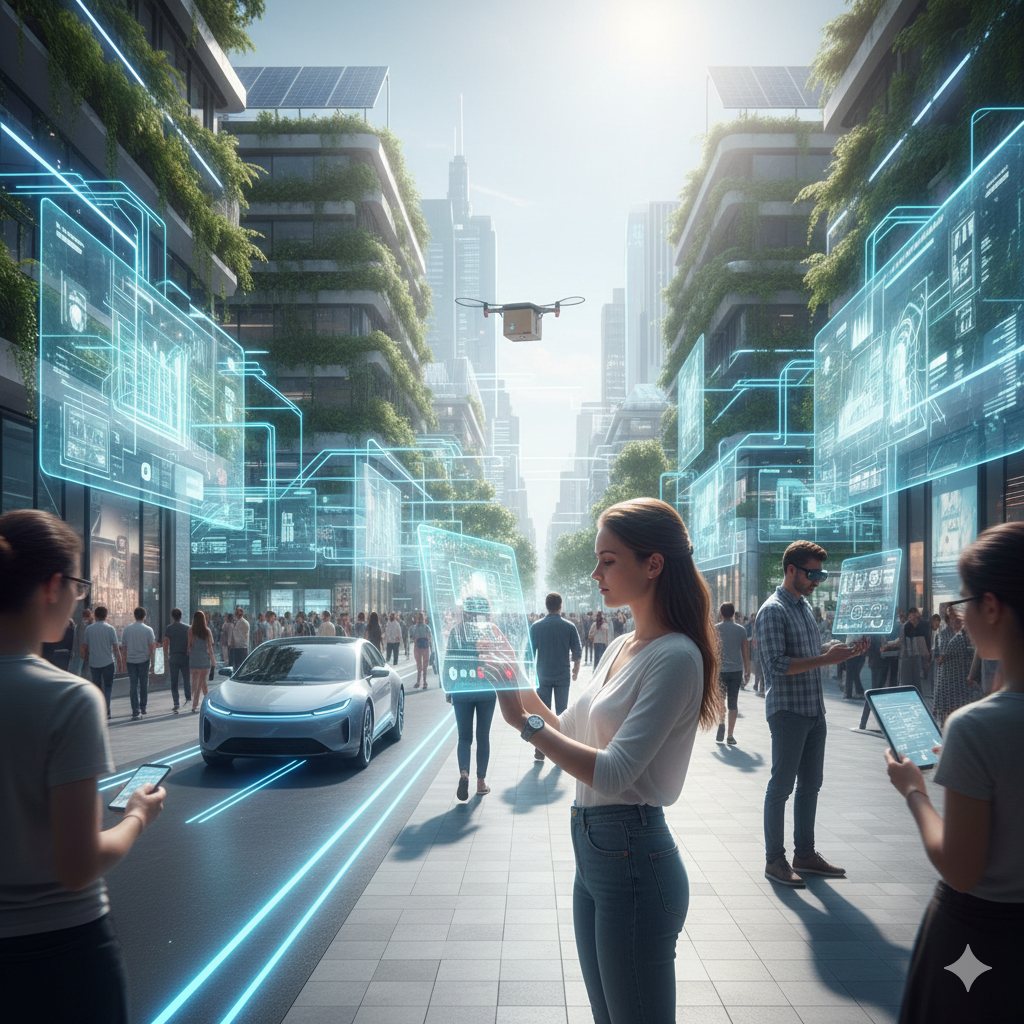
Not long ago, the idea of speaking to a device and receiving instant answers felt like science fiction. Virtual meetings across continents seemed extraordinary. Artificial intelligence sounded futuristic and distant. Yet today, these technologies are part of daily life.
The future is no longer something we wait for—it is unfolding in real time. Technology is reshaping how we communicate, work, learn, shop, travel, and even think. While innovation brings convenience and opportunity, it also introduces new challenges that require awareness and responsibility.
Understanding how technology is transforming our lives helps us adapt thoughtfully and use it intentionally.
The Digital Revolution in Communication
One of the most visible transformations is in communication. Smartphones, messaging apps, video calls, and social media platforms have erased geographical barriers. Families separated by oceans connect instantly. Businesses collaborate across time zones. Friendships form beyond physical borders.
Communication has become faster and more accessible than ever. Information spreads globally in seconds. This interconnectedness fosters cultural exchange, professional networking, and social awareness.
However, the speed of communication also demands digital literacy. Misinformation can spread just as quickly as truth. As technology evolves, so must our ability to critically evaluate information.
The future of communication is not just about speed—it is about responsibility.
The Workplace Transformed
Technology has redefined how and where we work. Remote work, once limited to specific industries, has become mainstream. Cloud computing allows teams to collaborate from anywhere. Digital project management tools streamline workflows.
Artificial intelligence and automation are reshaping industries. Routine tasks are increasingly handled by machines, freeing humans to focus on creativity, strategy, and innovation.
While automation raises concerns about job displacement, it also creates new opportunities. Emerging fields in data science, cybersecurity, artificial intelligence, and renewable technology continue to expand.
The future workforce demands adaptability. Continuous learning and skill development are essential in a rapidly evolving environment.
Education in the Digital Age
Technology has democratized education. Online courses, virtual classrooms, and educational apps provide access to knowledge beyond traditional institutions.
Students can attend lectures from global universities without leaving home. Self-paced learning platforms empower individuals to acquire new skills at any stage of life.
Interactive tools enhance engagement. Virtual reality can simulate historical events or scientific experiments. Artificial intelligence tailors learning experiences to individual needs.
Education is no longer confined to physical classrooms. Lifelong learning has become both possible and necessary.
Healthcare and Innovation
Technology is revolutionizing healthcare in profound ways. Telemedicine connects patients with doctors remotely. Wearable devices monitor heart rates, sleep patterns, and activity levels. Artificial intelligence assists in diagnosing diseases earlier and more accurately.
Robotic surgery enhances precision. Digital records streamline patient information management. Breakthroughs in biotechnology are advancing personalized medicine.
While ethical considerations remain important—especially regarding data privacy—the integration of technology into healthcare improves accessibility and outcomes.
The future of medicine is increasingly data-driven and patient-centered.
The Rise of Artificial Intelligence
Artificial intelligence (AI) stands at the forefront of technological transformation. From voice assistants to recommendation algorithms, AI influences daily decisions.
AI powers customer service chatbots, analyzes financial markets, optimizes supply chains, and supports scientific research. Machine learning systems improve over time, identifying patterns and making predictions with increasing accuracy.
Yet AI also raises questions about ethics, employment, and bias. Responsible development and regulation are crucial to ensure technology benefits society as a whole.
AI is not replacing humanity—it is reshaping how we collaborate with machines.
Smart Homes and Connected Living
The concept of smart living is becoming reality. Smart thermostats adjust temperatures automatically. Security systems monitor homes remotely. Voice-controlled assistants manage schedules, play music, and control lighting.
The Internet of Things (IoT) connects devices seamlessly. Appliances communicate with smartphones. Cars integrate navigation, entertainment, and safety features powered by data.
Convenience increases efficiency, but connectivity also introduces cybersecurity risks. Protecting personal data becomes a priority in a connected world.
The future home is intelligent, responsive, and interconnected.
E-Commerce and Digital Economies
Technology has transformed commerce. Online shopping platforms allow consumers to browse global markets instantly. Digital payment systems facilitate secure transactions. Cryptocurrencies and blockchain technology introduce alternative financial models.
Small businesses can reach international customers without physical storefronts. Entrepreneurs leverage social media and digital marketing to build brands.
The digital economy fosters innovation and competition, but it also requires regulatory frameworks to ensure fairness and security.
Commerce has moved beyond brick-and-mortar—it is now borderless and dynamic.
Social Media and Cultural Shifts
Social media platforms influence culture, politics, and personal identity. They provide spaces for expression, activism, and community-building.
Movements gain momentum online. Artists showcase work globally. Influencers shape trends and consumer behavior.
However, social media also affects mental health and self-perception. The pressure to present curated lifestyles can create unrealistic expectations.
Navigating digital spaces mindfully is essential. Technology shapes culture, but individual responsibility shapes experience.
Environmental Impact and Sustainability
Technology plays a critical role in addressing environmental challenges. Renewable energy systems, smart grids, and electric vehicles contribute to sustainable development.
Data analytics help monitor climate patterns. Precision agriculture improves food production efficiency. Green technologies reduce carbon footprints.
At the same time, electronic waste and energy consumption from data centers highlight environmental trade-offs.
The future depends on balancing innovation with sustainability.
Ethical and Privacy Concerns
As technology integrates deeper into daily life, privacy becomes increasingly important. Personal data fuels algorithms and targeted advertising. Biometric systems store sensitive information.
Ethical frameworks must guide development. Transparency, accountability, and data protection policies ensure trust.
The future of technology must prioritize human rights alongside innovation.
The Human Element
Despite rapid advancement, the human element remains central. Technology enhances capabilities but does not replace empathy, creativity, or ethical judgment.
Successful adaptation requires balancing digital efficiency with human connection.
The challenge is not whether technology will continue to evolve—it will. The question is how we choose to integrate it into our lives.
Preparing for Tomorrow
The pace of change demands readiness. Developing digital literacy, staying informed about emerging technologies, and embracing lifelong learning prepare individuals for the future.
Flexibility becomes a valuable skill. Industries will continue transforming, and new opportunities will arise.
The future belongs to those willing to adapt thoughtfully.
Conclusion
The future is not approaching—it is here. Technology reshapes every aspect of life, from communication and healthcare to commerce and culture.
While innovation brings convenience and opportunity, it also demands responsibility, awareness, and ethical consideration.
Embracing technology with clarity and intention allows us to harness its potential without losing sight of human values.
The future is now—not defined solely by machines or algorithms, but by how we use them.
In this evolving landscape, the greatest transformation may not be technological at all—it may be how humanity chooses to grow alongside it.